Merrimack Valley, MA · Southern New Hampshire

Multi-Family Electrical Service Upgrades & Meter Bank Replacement

Meter banks, separate unit meters and house panels for your property.

Sylvester Electric assesses your building’s electrical service, explains the required work and coordinates utility requirements, inspections and planned power interruptions.

For owners and property managers of two-family homes, triple-deckers, apartment buildings and other multi-unit properties.

Meter bank, service upgrade or unit panel?

These terms describe different parts of the electrical system. Your project may involve one part or a combination.

Meter bank replacement

A meter bank, meter stack or meter center groups multiple utility meters in one assembly. Replacement addresses the meter sockets and related equipment, disconnects and connections included in the approved scope.

Replacing the bank does not automatically increase the building’s electrical capacity.

Multi-family service upgrade

A service upgrade addresses the power available to the building and the equipment that supplies it. We review existing loads, planned additions, service ratings and utility requirements before recommending capacity.

The number of meters alone does not determine the required service size.

Unit panels and feeders

A breaker panel distributes power to a unit’s circuits. Its feeder brings power from the service equipment. A project may include electrical panel replacement, new feeders or both.

A new unit panel does not by itself upgrade the building’s entire service.

Looking for an electrical meter upgrade? We evaluate the customer-owned equipment and building wiring. A utility’s routine smart-meter exchange is a different service; contact your utility about its billing meter.

Separate unit meters and common-area house meters

Separate usage for each unit

We assess which circuits serve each apartment, where feeders run and whether wiring is shared. Correct separation may require interior circuit changes as well as a new meter arrangement.

Adding a meter alone does not separate existing wiring. The utility account arrangement and approvals also need to fit the property.

A house meter for shared loads

A house meter can serve building loads such as hallway and exterior lighting, shared receptacles or common equipment. A dedicated house panel distributes that power to the shared circuits.

We identify common-area loads before planning the meter positions and circuit work, including any proposed lighting improvements.

Separately metering a property does not itself authorize another dwelling unit or determine tenant billing obligations. Tell us about an approved renovation or conversion early so the electrical scope can be coordinated with the project.

Common-area house panels: when does a building need one?

A house panel, also called a common-area or landlord panel, supplies shared building circuits. A house meter measures their electricity use. They perform different jobs and are often planned together.

What can the house panel supply?

Typical loads include hallway and stairway lights, exterior and parking-area lighting, shared receptacles, door-entry equipment and common basement equipment. Shared laundry, pumps or other building equipment may also belong in the assessment, depending on how they serve the property.

We identify each load and size the panel and feeder for the actual equipment. Emergency and life-safety systems can have additional requirements.

When is a separate panel needed?

It should be evaluated when shared loads are supplied from an apartment panel, when unit and owner usage need separation, or when a renovation adds common equipment. Separating common circuits from apartment equipment may be required by the applicable electrical code and approved project scope.

For example, three apartment meters plus a house meter can provide separate measurement for three units and the building’s shared loads. The correct arrangement depends on the building, existing wiring, utility and local approvals.

We trace the circuits before proposing changes. A new house panel without the necessary circuit transfers will not correct shared wiring; a new meter alone will not do it either. We review existing installations and any applicable exceptions with the inspector rather than assume every older building needs the same retrofit.

Lever-bypass handles for house and common-area meters

A lever bypass is a feature inside an approved meter socket. It allows authorized personnel to maintain a path for utility power during certain meter removal or maintenance work. It is separate from the common-area breaker panel and its main disconnect.

When is a bypass handle required? The serving utility’s specifications determine that. House or common-area meters may be classified differently from apartment meters. Liberty’s New Hampshire specifications explicitly include house/common-area meters among applications requiring bypass levers. Unitil requires bypass sockets for specified commercial and 400-amp residential installations. We confirm the classification and approved equipment with your utility before selecting the house-meter socket.

A bypass is not a generator transfer switch, does not add capacity and does not keep lights on during a utility outage. Meter-bank replacement can still require a planned shutdown. Bypass equipment and sealed meter compartments are for utility-authorized personnel to handle.

Utility references: Liberty NH electrical installation specifications · Unitil installation requirements. Requirements and equipment approval are confirmed for your project.

When to have your building assessed

Existing equipment or wiring concerns

  • Deteriorated meter enclosures, damaged equipment or inspection findings
  • Unclear unit identification or shared unit and common-area circuits
  • A planned meter relocation or replacement of obsolete equipment
  • Panel or feeder concerns that need diagnosis

Renovations and future electrical loads

  • Apartment renovations or an approved change in building use
  • Heat pumps, electric ranges, dryers or other new equipment
  • EV charging for tenants or shared parking
  • A proposed house meter for common-area loads

We assess the building before recommending a complete replacement. For EV charging, compatible load management may be an option after capacity and equipment compatibility are checked.

Existing equipment and completed meter installations

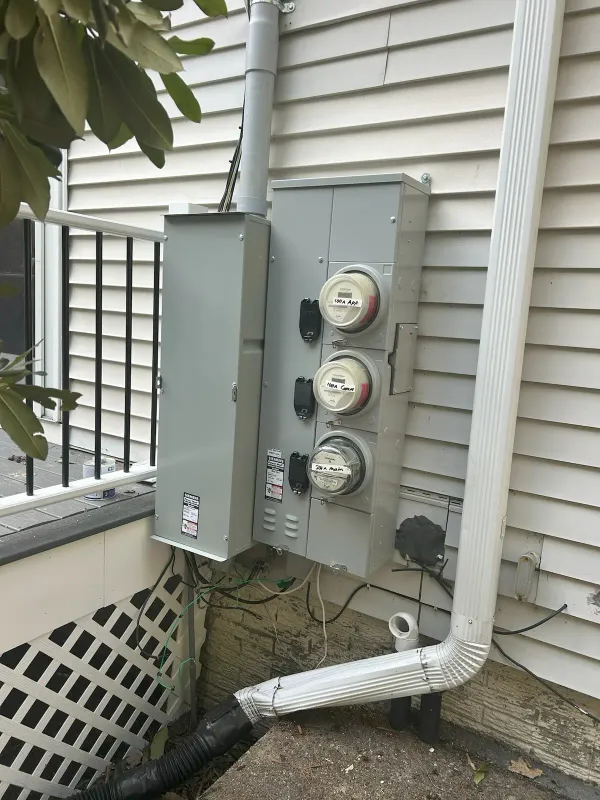
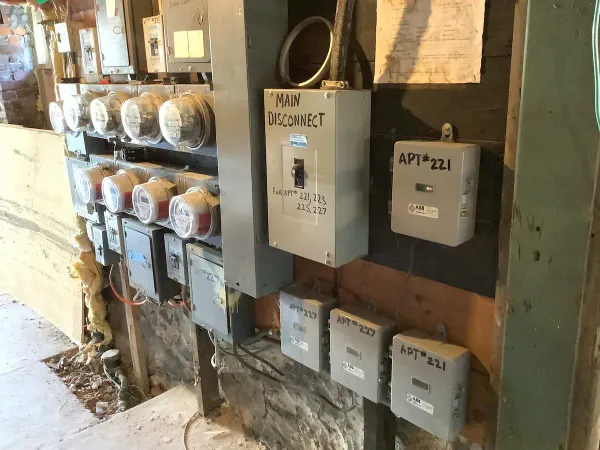
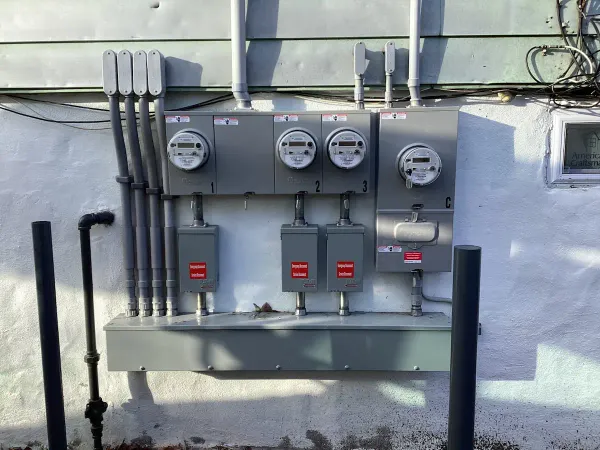
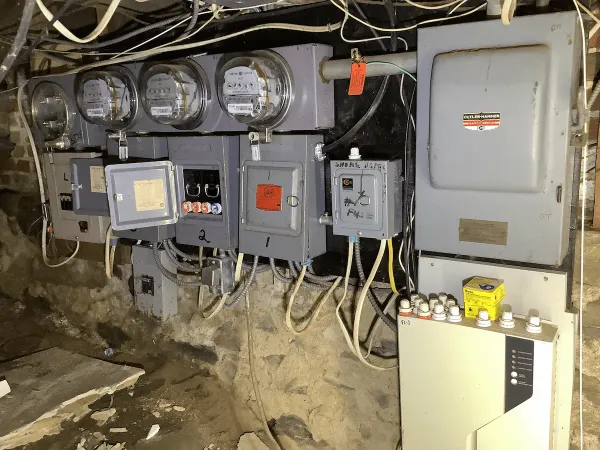
Photos from this service page show the range of equipment involved. Your building’s layout, approved equipment and installation scope will differ.

Before: existing indoor meter equipment and electrical panels
Before: Indoor meter equipment and panels.
After: exterior meter installation at a multi-family property
After: Exterior meter installation.
Before: indoor multi-meter equipment mounted on an older wall
Before: Older indoor multi-meter arrangement.
After: exterior meter bank and service disconnects
After: Exterior meter bank and disconnects.

A coordinated plan for owners and tenants

What may be included in the electrical work?

Depending on the assessment, the scope can cover meter sockets or a meter bank, service-entrance conductors, disconnects, unit feeders, panels, grounding and bonding, circuit separation and permanent unit or house-meter identification. An overhead service and an underground service can involve different access, routing and utility work. Your proposal identifies the parts being replaced and any separate utility or restoration work.

1. Assess the property

Review meter positions, unit identification, panels, feeders, shared circuits, access and existing or proposed loads.

2. Define the approved scope

Confirm utility equipment requirements, service arrangement and location, then explain the proposed work, permits, inspections and pricing.

3. Plan access and power interruptions

Coordinate the expected shutdown and required access. Owners can use that plan to notify occupants and prepare for affected building equipment.

4. Install, inspect and reconnect

Complete the agreed electrical work, arrange required inspection steps and coordinate utility reconnection. Timing depends on approvals, equipment and site conditions.

A meter bypass, when required by the utility, is an equipment feature. It is not backup power and does not eliminate an installation outage. We discuss the expected sequence after assessing the property.

What affects the price of a meter bank or service upgrade?

Price depends on the work required throughout the building, beyond the number of meter sockets.

Equipment and capacity

Meter positions, approved equipment, service ratings, disconnects, panel condition and required grounding and bonding work.

Wiring and access

Feeder length and routing, circuit separation, interior panel work, finished walls, equipment relocation and difficult access.

Coordination and site work

Utility requirements, permits, inspections, occupied-unit access, equipment availability and any trenching, exterior or finish-restoration responsibilities.

We explain the proposed scope and pricing after assessment, including what work is included and which responsibilities belong to the owner or utility. A single-family panel price is not a reliable estimate for a multi-unit meter project.

Multi-family electrical upgrade questions

What is another name for a multi-meter upgrade?

Depending on the scope, it may be called a meter bank replacement, meter stack replacement, multi-gang meter socket replacement or multi-family electrical service upgrade. Describe your building and what you want to change; we can identify the appropriate scope.

Can you add a house meter or separate apartment meters?

We assess the existing circuits, meter arrangement, utility requirements and account setup. A new position may require a house panel, feeders or circuit separation. Adding a socket alone does not ensure that each meter records only the intended loads.

Does replacing a meter bank increase the available amperage?

Not automatically. The service supply, conductors, equipment ratings and building load calculation need to be considered together. We assess current needs and future plans before recommending a larger service.

Will tenants lose power, and how long does the work take?

A planned interruption is generally part of replacing service equipment. The duration and overall project schedule depend on the scope, access, equipment availability, inspections and utility coordination. We explain the expected sequence after assessment rather than promise a universal one-day installation.

Can an older two-family home or triple-decker be upgraded?

Yes. We review the existing service, interior alterations, shared circuits and feeder routes. Older installations can contain work from different periods, so the actual wiring arrangement needs to be verified.

Do meter bank and service upgrades need permits?

Permit, inspection and utility approval steps depend on the property and proposed work. We identify the required electrical approvals and coordinate the work sequence, including inspection and utility reconnection where needed. Tell us about building renovations or a unit conversion so the electrical work can fit the wider project.

Will walls need to be opened?

Possibly. A replacement at the existing meter location can have a different access requirement from separating interior circuits or routing new feeders. We discuss expected access and restoration responsibilities in the proposed scope.

Which meter equipment can be used?

Equipment selection depends on the serving utility’s requirements, service voltage, ratings, location and availability. Industry product families include Siemens PAK Metering and Square D EZ Meter-Pak. Those examples are not a promise that a particular model is approved or suitable for your building.

Is this the same as a utility smart-meter replacement?

No. The utility handles its billing meter and routine meter exchanges. Our assessment concerns the customer-owned meter socket or bank, service equipment and building wiring. Utility coordination is still required where its equipment or connection is involved.

Prepare for a useful property assessment

Have these details ready when you contact us:

  • Property town, address and number of existing units
  • Utility company, current meter count and any house meter
  • Inspection notes, utility correspondence and proposed renovations
  • Planned heat pumps, electric appliances or EV charging
  • Access arrangements for meters, panels and occupied units

Photos can help with initial planning. Photograph equipment only from a normal, accessible position; leave covers and sealed compartments closed. The installation scope still depends on an on-site assessment.

Tell us whether you are planning improvements or need an existing problem diagnosed. We explain the appropriate appointment and any applicable diagnostic charge before scheduling.

Related electrical services

What customers say about Sylvester Electric

These existing customer reviews describe broader electrical work.

“Technician arrived on time, he repaired the problem quickly and efficiently and I was happy with the cost ...not overcharged. I have already recommended the company to my friends and relatives.”

Judy D.

“They installed smoke and carbon monoxide detectors and two light fixtures. They were easy to work with and very professional.The technician was personable and knowledgeable.”

Elena C.

“The expertise and care applied to both fixing and installing new electrical wiring has been first rate. We have been impressed by the efficiency and ease of contact with the team. We recommend Sylvester for anyone looking for top tier and reliable electrical work at a fair price.”

Anna K.

Let’s plan your building’s electrical upgrade

Tell us your property location, number of units and what needs to change. Our Dracut-based team serves Merrimack Valley and Southern New Hampshire.

Use the existing request form below to arrange the next step.

What Our Customers are Saying

Technician arrived on time, he repaired the problem quickly and efficiently and I was happy with the cost ...not overcharged. I have already recommended the company to my friends and relatives.

★★★★★
Judy D.

They installed smoke and carbon monoxide detectors and two light fixtures. They were easy to work with and very professional.The technician was personable and knowledgeable.

★★★★★
Elena C.

The expertise and care applied to both fixing and installing new electrical wiring has been first rate. We have been impressed by the efficiency and ease of contact with the team. We recommend Sylvester for anyone looking for top tier and reliable electrical work at a fair price.

★★★★★
Anna K.