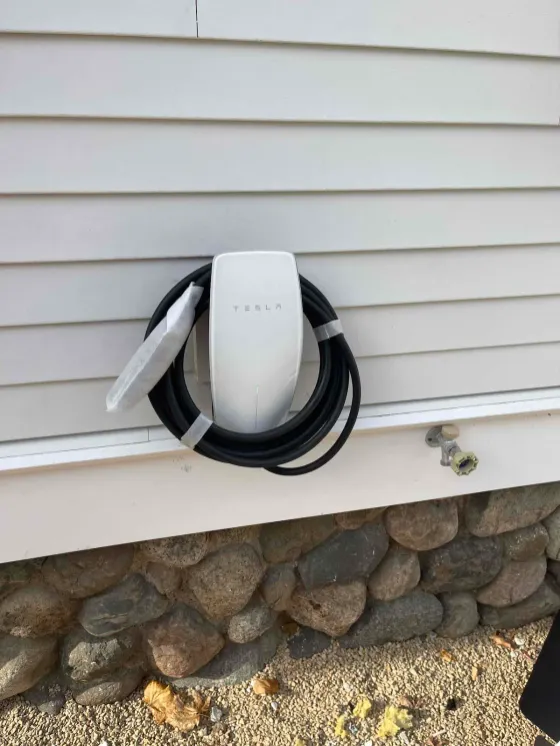
Charge while you are home
Choose output around your driving and usual time parked. Level 2 charging can add energy faster than a suitable standard 120-volt supply; the actual rate depends on your vehicle and equipment.

Level 2 home charging · Lowell, MA
Make charging at home fit your vehicle, daily driving and parking space. Sylvester Electric plans the charger, dedicated circuit and electrical capacity together.
You may not need a service upgrade. We assess your home before recommending a charging rate, load management or additional electrical work.
Serving Lowell from Dracut · (978) 957-3422
A convenient charger starts with where you park and how much driving you do. A garage installation close to the panel has different needs from a driveway charger or detached garage. Cable reach, access, weather exposure and the wiring route all matter.
Based in nearby Dracut, Sylvester Electric serves Lowell homeowners and reviews each home, its equipment and future plans on site. We review your actual home, existing equipment and future plans, including a second EV or other large electrical loads. For other projects, visit our Lowell electrician page.
Choose output around your driving and usual time parked. Level 2 charging can add energy faster than a suitable standard 120-volt supply; the actual rate depends on your vehicle and equipment.
Plan a reachable connector and a practical cable route without blocking doors or walking areas. We consider indoor and outdoor mounting, parking position and protection from damage.
We review available capacity, the dedicated circuit and the equipment instructions before recommending work. Open breaker space alone does not establish that a service can support another load.
Plan the breaker, conductors, circuit protection and charging output for the selected equipment and your home’s electrical system.
We install Tesla, ChargePoint and other compatible Level 2 chargers, including customer-supplied units. Share the exact charger model and vehicle so we can confirm connector and equipment requirements.
Review weather-rated equipment, mounting, conduit, wiring distance and any trenching needed to reach your parking space.
Compare a direct connection with a suitable dedicated 240-volt receptacle installation. The charger instructions and required protection determine the appropriate setup.
Compare a suitable charging rate, compatible load management and any necessary panel or service work. An upgrade is recommended when the assessment supports it.
We can plan charging for two vehicles. Whether both can charge at the same time depends on your electrical service capacity, the charger setup and any load-management equipment. Tell us if you plan to add a second EV so we can consider both parking spaces and future wiring. When excavation is already needed, planning conduit for a future charger may help avoid doing that digging twice; the best option depends on the property and final charger locations.
The charger and its electrical connection need to be planned together. Send us the model information if you already own a charger.
| Option | What to consider |
|---|---|
| Hardwired charger | Connects directly to its circuit. The equipment instructions, selected output and available capacity determine the wiring and protection. |
| Plug-in charger | Uses a suitable dedicated receptacle, such as a manufacturer-specified 240-volt outlet. We review the receptacle rating, circuit and required protection for its location. |
The highest advertised charging rate is not automatically the best fit. Your vehicle’s charging capability and your daily needs matter too.
We review panel condition and use an electrical load calculation to assess service capacity for your existing loads and proposed charger. A full panel and a service with limited spare capacity are different issues.
Where suitable, a lower charging output or compatible load-management system may let you charge within the existing service capacity. Stepwise Tap monitors household electricity use and manages the connected charging load when capacity is limited.
Charging may be reduced or temporarily paused, depending on the equipment and configuration. Load management does not increase your service rating or correct damaged electrical equipment.
If repairs or an upgrade are needed, we explain the reasons and scope. Learn about our Lowell panel and service upgrade options.
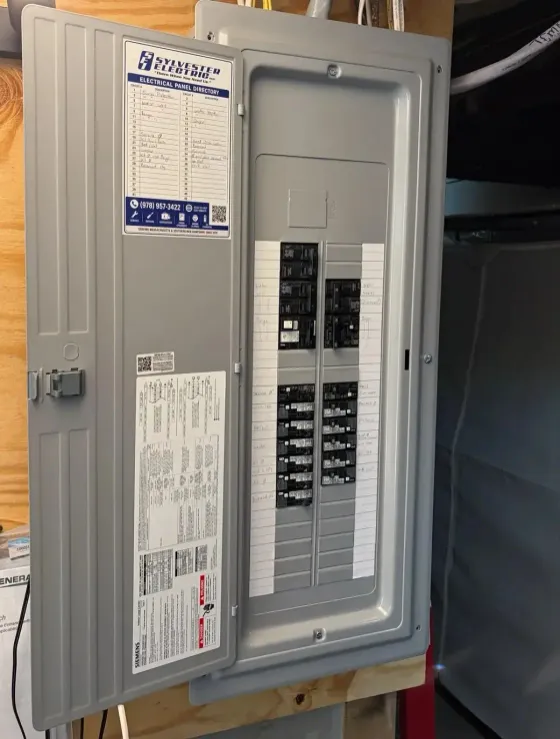
Planning another project? Tell us about a heat pump, addition, workshop or second EV so those plans can be considered in the electrical assessment.
EV estimates are free in Lowell. Tell us your vehicle, charger model, where you park and whether a second EV is planned. We assess the main panel, available space and capacity, perform a load calculation, and review the distance and wiring route to the charger.
We discuss the charger connection, capacity options and wiring route, then explain the proposed scope and price before work begins.
We handle electrical permit and inspection coordination for Lowell installations. We confirm the charger, access and schedule, and identify any separate utility or service work in the proposed scope.
Plan for about six to eight hours on site for a typical installation; actual time depends on the wiring route and site conditions. Our electrician works at the panel and runs the wiring or conduit to the charger location. If you supply the charger, have it at the home for installation. We configure and test it, help connect it as applicable, and show you how to use it.
The City of Lowell’s online permitting portal accepts electrical permit applications. Sylvester Electric coordinates the required electrical permit and inspection for the agreed installation; scheduling can depend on the work and inspection availability.
The charger is one part of the installed price. A short, accessible circuit run has a different scope from an outdoor installation, detached garage or project needing electrical service work. Possible utility rebates may be available; see current program information. Eligibility and terms vary.
The charger model, connector, connection method and selected charging output affect the circuit and equipment needed.
Wiring distance, finished walls or garage surfaces, conduit, outdoor mounting, brick or concrete work, and excavation can change the work involved.
Existing equipment, load management, required repairs, permit needs and utility coordination are assessed together.
Your proposal should identify what is included, equipment supplied by each party, any separate work and the expected schedule. We assess your installation and explain the price before you authorize the work.
Planning your EV charger installation? Explore our current discounts and financing options, and ask our team which offers apply to your project.
Mention your coupon when scheduling. Offer terms apply; financing is subject to approval.
Lowell Light & Power customers can check the utility’s current EV charging information for any available rebate and eligibility requirements. Programs can change, so confirm current terms before purchasing equipment. If Sylvester Electric supplies the charger, we can provide applicable product paperwork. If you supply it, bring the paperwork that came with the charger and we can help coordinate installation documentation. Customers served by another utility should check that provider’s current program rules. See Massachusetts EV charging resources.
Not always. We check the existing equipment and available electrical capacity alongside your proposed charger. A suitable charging rate or compatible load-management system may allow charging on the existing service. Some homes still need repairs or an upgrade.
The choice depends on the charger instructions, desired output and installation location. A plug-in unit needs a suitable dedicated receptacle and required protection. A hardwired unit connects directly to the circuit. We compare the complete installation before you purchase equipment.
We can assess Tesla Wall Connectors and other Level 2 equipment, including customer-supplied chargers. Send the exact model and vehicle information so we can confirm the connector, installation instructions, outdoor rating and electrical requirements.
Yes, when the equipment and installation are suitable for the location. We review mounting, weather exposure, cable reach, the wiring route and protection from damage. A detached garage or separate driveway may need additional wiring, conduit or trenching.
Stepwise Tap monitors household electrical use and manages the connected charging load when capacity is limited. Depending on compatible equipment, charging can be reduced or temporarily paused. It does not increase the service rating. We assess compatibility and the installation before recommending it.
A new EV charging circuit requires electrical permit and inspection coordination. Lowell’s Wiring Inspector issues electrical permits and inspects wiring installations. We confirm the requirements for the agreed work and explain the inspection steps.
The installed price depends on the charger, wiring distance, access, outdoor or trenching work, existing electrical equipment, load management and permit needs. We assess the installation and explain the scope and price before work begins.
Installation timing depends on the work, equipment, access, permits and any utility coordination. Charging speed depends on the vehicle, charger settings and available power. We plan around your daily driving and time parked, rather than promise the same result for every home.
Often, yes. We review both vehicles, parking positions, charging schedules and electrical capacity. Compatible power-sharing or load-management equipment may help. Two chargers do not always need to operate at full output together.
Discuss your vehicle, parking space and installation options with Sylvester Electric.
Tell us about your vehicle, your home and when you would like to install a charger. Our team will follow up to discuss the next step and appointment availability.
Loading your consultation form…
During business hours, our team follows up as soon as possible. Messages received after hours are returned the next business day.
Licensed in Massachusetts & New Hampshire
MA Electrical Business #4328 A1
Master Electrician: MA #18290 A · NH #11225