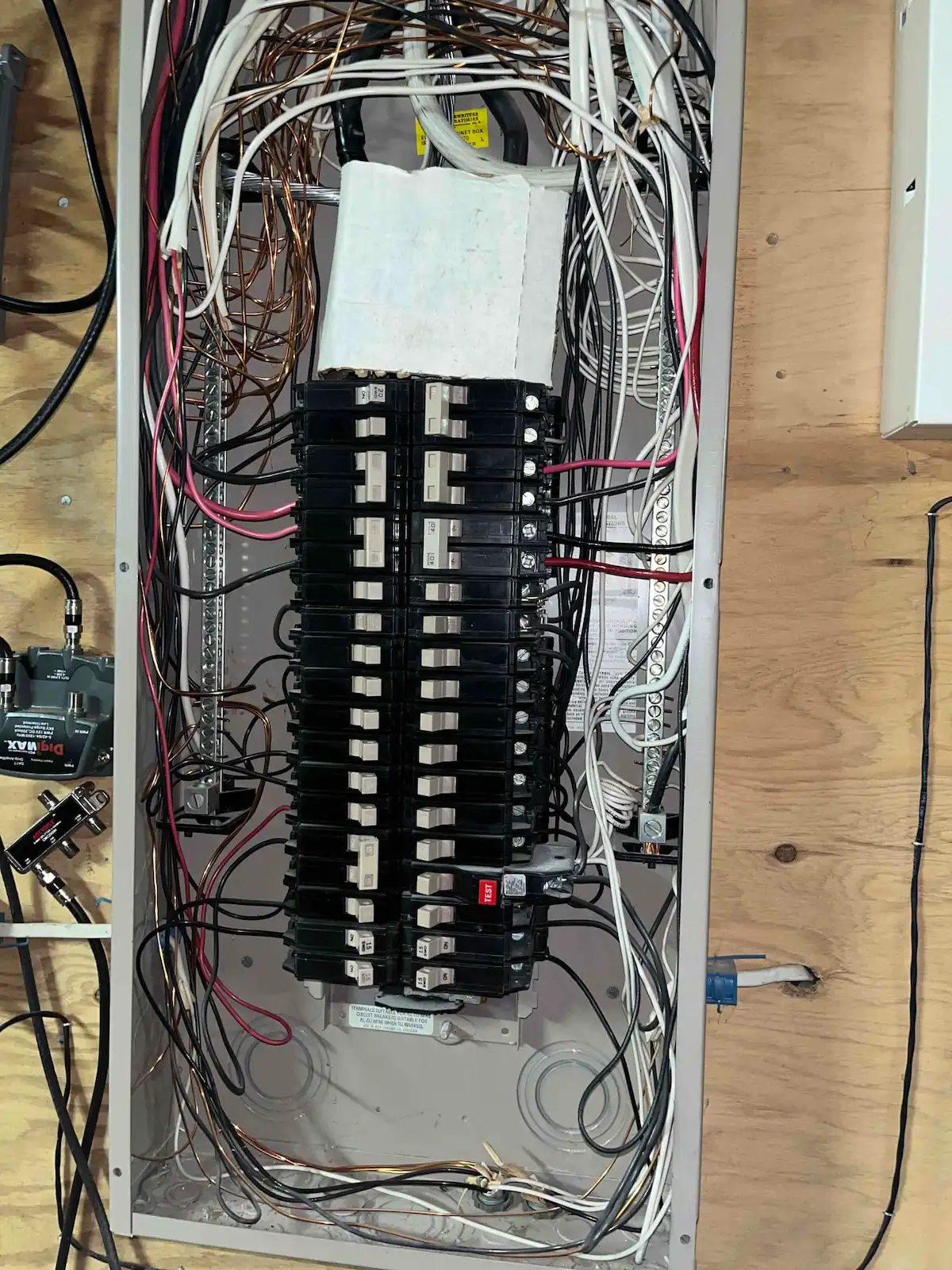
Home electrical safety | Merrimack Valley MA & Southern NH
A breaker that keeps tripping may be protecting your home's wiring from a real problem. The answer starts with finding the cause—not simply replacing the breaker or repeatedly resetting it.
Why circuit breakers trip
Circuit breakers are designed to interrupt electricity when certain unsafe conditions occur. A trip does not automatically mean the breaker is defective or that you need a complete panel replacement. What was running, how quickly it trips and which rooms lose power are useful clues.
1. Too many appliances on one circuit
Space heaters, hair dryers, microwaves and other high-demand devices can overload a shared branch circuit. If the breaker trips when two kitchen appliances operate together, the circuit load may be the problem. The solution might involve using equipment differently or installing an additional dedicated circuit after proper evaluation.
2. A faulty appliance or short circuit
A damaged appliance, cord, plug, receptacle or wiring connection can produce a short circuit. A breaker that trips immediately or trips again with little apparent load needs diagnosis. Do not keep resetting it to see whether the problem goes away.
3. Ground-fault or arc-fault protection
Some breakers have GFCI protection against certain ground faults, AFCI protection against certain dangerous arcing conditions, or both. A trip may mean that a protective device is responding to an actual wiring, equipment or moisture problem. A GFCI device may be located at the panel rather than the outlet. For outlet-specific issues, read our GFCI outlet troubleshooting guide.
4. A loose connection or breaker problem
Loose connections, deteriorated wiring, an unsuitable breaker or a defective breaker can all cause symptoms. The device must be compatible with the panel and appropriate for the circuit; replacing it alone may not resolve a wiring fault.
Safe first checks for homeowners
If there is no smoke, burning odor, visible damage, flooding or other sign of danger, note which areas lost power and what equipment was running. You may unplug ordinary devices that are safe to reach and check whether a utility outage could explain a widespread loss of power. Do not remove panel covers, open receptacles, touch exposed wiring or handle wet electrical equipment.
Warning signs that need prompt attention
- Burning odor, smoke, scorching or discolored equipment
- Buzzing, sizzling or crackling from the panel or receptacles
- Warm, damaged or loose electrical devices
- Breaker repeatedly tripping or refusing to stay on
- Water intrusion or signs of moisture near electrical equipment
Stop using the affected circuit if these occur. For fire, smoke or immediate danger, leave the area and call 911. Sylvester Electric does not provide 24/7 emergency dispatch; contact our office during normal business hours for nonemergency service.
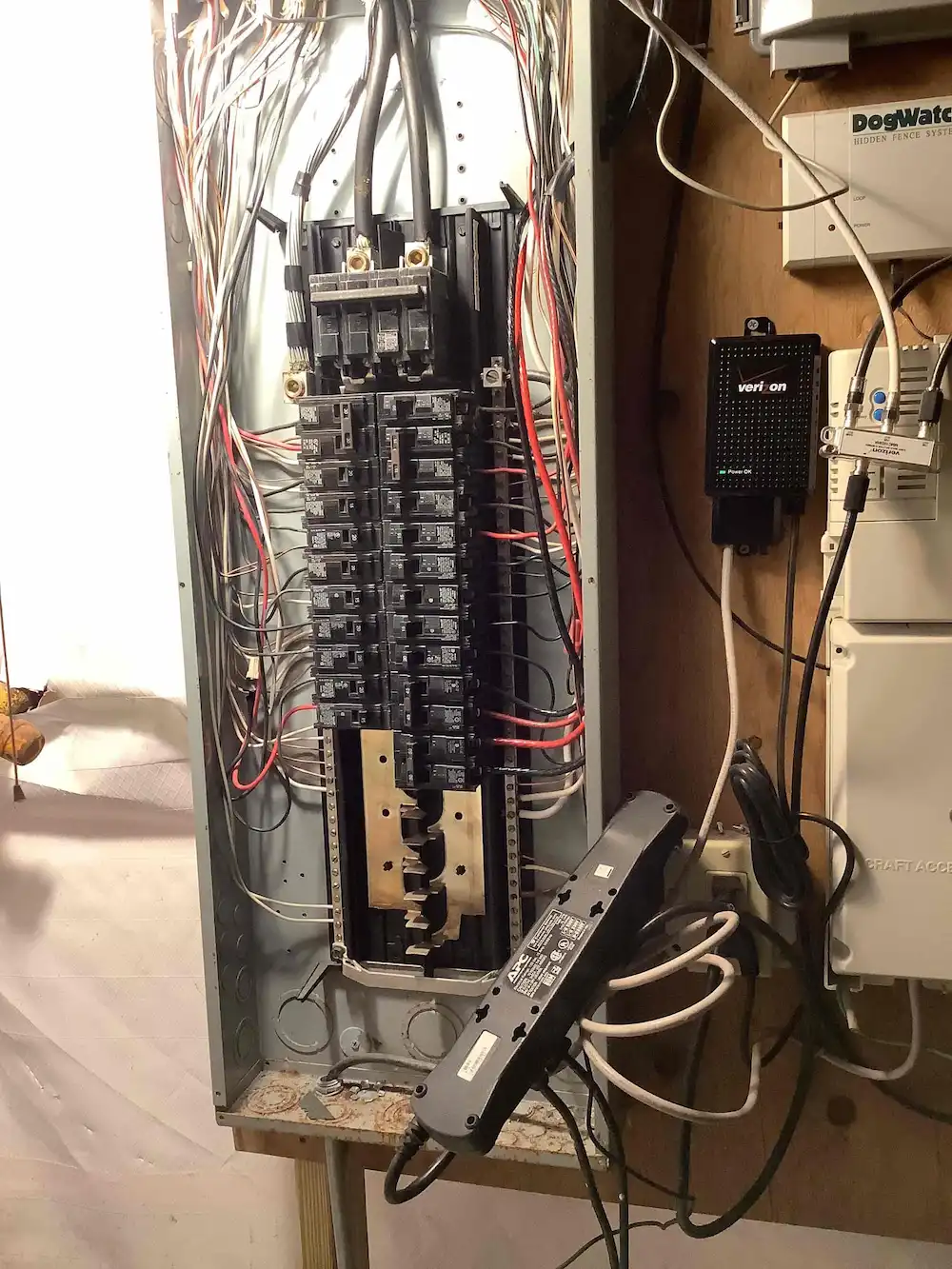
Does it mean you need a new breaker, circuit or electrical panel?
Not necessarily. An appliance or wiring fault may require repair. Repeated overloads may justify a dedicated circuit. A verified defective breaker may need compatible replacement. A damaged or unsuitable panel can require broader evaluation, but one tripping breaker alone does not prove you need electrical panel replacement.
The correct breaker type and rating depend on the panel, the conductors, connected equipment and the installation's requirements. An electrician should assess the actual conditions instead of assuming that every older home needs a service upgrade.
What to tell the electrician
- Which room, outlet or appliance loses power
- Whether the breaker trips immediately or after equipment runs for a while
- Whether a new appliance or remodel preceded the issue
- Whether you notice warmth, smells, unusual sounds or moisture
- Whether other rooms or circuits are also affected
These details can help with electrical troubleshooting and repair. The technician can assess the circuit and explain whether a connection repair, equipment repair, breaker replacement, new circuit or other work is appropriate.
Frequently asked questions
Can I replace a 15-amp breaker with a 20-amp breaker?
No. The circuit wiring and equipment must be evaluated before any breaker rating changes. Increasing the rating without checking the circuit can create a serious fire hazard.
Why does it trip when nothing is plugged in?
Some loads are hardwired or out of sight. Faulty wiring, moisture or an unsuitable breaker may also be involved. The exact cause requires testing by a qualified electrician.
Does a tripping breaker mean my 100-amp service is too small?
No. A single branch-circuit trip may be a localized issue. An overall service upgrade should be based on the home's electrical demand and condition, not a single symptom.
What about older homes in Lowell, Dracut and Southern NH?
Older homes may have added equipment and changing electrical demands, but age itself is not a diagnosis. Actual circuit loading, wiring condition and panel compatibility determine what needs attention. Sylvester Electric serves the Merrimack Valley in Massachusetts and Southern New Hampshire.
Breaker keeps tripping? Find the cause first.
Family-owned since 1979, Sylvester Electric provides residential electrical service across Merrimack Valley MA and Southern NH. Let our office know what is happening so the right visit can be arranged.
Request Electrical ServiceCall (978) 957-3422 during office hours. Applicable charges and scheduling are confirmed by our office.
This educational article is not a substitute for an on-site electrical diagnosis. Never work inside an energized panel.